
Quick answer
The Similan Islands are 84 kilometers from Phuket by sea, requiring speedboat transfers of 60 to 90 minutes depending on departure pier and weather. Most tours leave from Tab Lamu Pier in Phang-nga province—closer to the archipelago than Phuket's marinas—cutting travel time to roughly one hour. Direct routes from Phuket's Chalong or Ao Por piers take 75 to 90 minutes and operate less frequently during the park's October-to-May season.
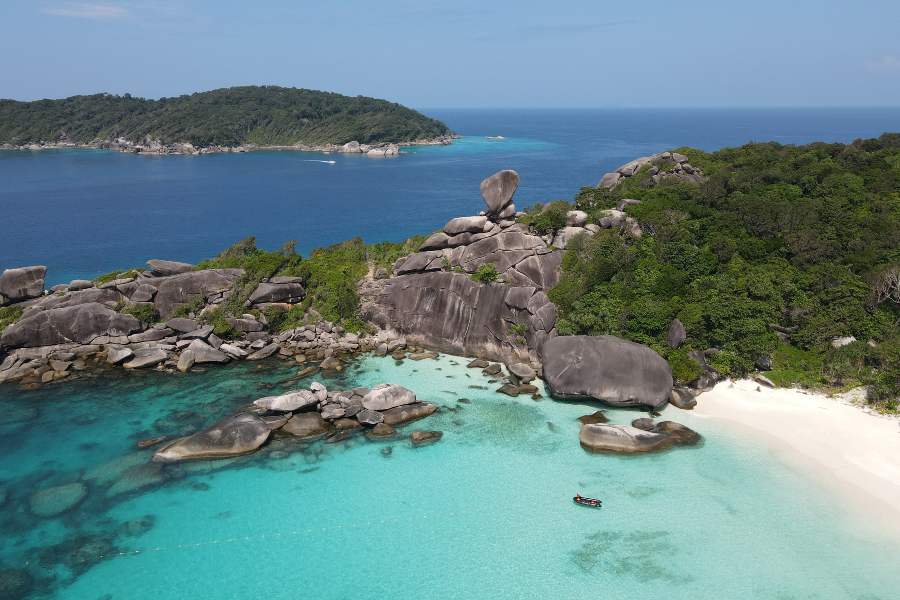
The Andaman Sea between Phuket and the Similan archipelago measures 84 kilometers in a direct northwest line, but no visitor crosses it in a straight shot. The route you take, the pier you leave from, and the vessel assigned to your tour rewrite how far is Similan Islands from Phuket in practical terms—turning a fixed geographic span into a journey that swings between one hour and ninety minutes on the water. Most operators solve the distance equation by busing passengers north to Tab Lamu Pier in Phang-nga province before launching speedboats. That staging point sits 25 kilometers closer to the national park boundary than Phuket's southern marinas, trimming open-water transit to roughly 60 minutes and sparing boats the need to round Phuket's northwestern cape. Tours departing directly from Chalong or Ao Por cover the full marine distance, adding 15 to 30 minutes depending on swell height and whether the captain throttles back through protected zones near Ko Bon. Sea state matters as much as distance. November through February, the northeast monsoon flattens the Andaman, allowing speedboats to plane at 35 knots and hold to schedule. March and April bring afternoon thermals that chop the surface past Ko Tachai, forcing captains to slow through the final approach and stretching the Similan Islands distance from Phuket by ten or fifteen minutes. May closes the park entirely as southwest monsoon swells make the crossing unsafe. The park opens at 08:00, but most speedboats arrive between 09:30 and 10:30 after accounting for road transfer from Phuket hotels, pre-departure briefings at the pier, and the marine leg. Early departures—buses leaving Phuket by 06:30—land you on Ko Miang or Ko Similan within the recommended 08:00 to 10:00 arrival window, ahead of the midday flotilla. Day-trip itineraries typically allocate two to three hours at the islands before the return crossing, which runs faster with following seas and lighter passenger loads.
“The 84-kilometer span between Phuket and the Similans compresses or stretches depending on which pier you leave from and what the Andaman decides to do that morning.”
When Is the Best Time to Visit After Determining How Far Is Similan Islands From Phuket
The Similan Islands are accessible to visitors from mid-October to mid-May, as the national park closes annually during the monsoon season to allow for ecosystem recovery. For the best experience, plan your visit during the early morning hours to bypass the main influx of speedboats.
Mid-October to December
Low to moderate24°C–31°C; dry season onset.
This period offers clear waters and calmer seas after the park reopening.
January to March
High25°C–33°C; peak dry season.
Expect peak tourist numbers and high visibility for snorkeling activities.
April to mid-May
Moderate27°C–34°C; rising humidity.
The final weeks before the seasonal closure provide warm water and fewer visitors.
Weekday mornings
Low to moderate—
Arriving during the best arrival window of 08:00–10:00 helps avoid peak daily crowds.
Verdict: The best time to visit is mid-week between January and March, arriving during the 08:00–10:00 window to avoid peak crowds.
Regulations and Conduct Rules for Visiting Similan Islands
Mu Ko Similan National Park enforces strict environmental protection rules to preserve its marine ecosystems and coral reefs. All visitors must follow these regulations during their visit.
Do
- Use reef-safe sunscreen without harmful chemicals
- Stay on marked trails when on islands
- Follow your guide's instructions at all times
- Dispose of waste in designated bins on boats
- Respect wildlife by maintaining safe viewing distances
Don't
- Touch, stand on, or damage coral reefs
- Feed or chase marine wildlife or land animals
- Bring single-use plastics onto the islands
- Collect shells, rocks, or any natural materials
- Smoke outside designated areas on boats